The Home Office Deduction
What You Need to Know

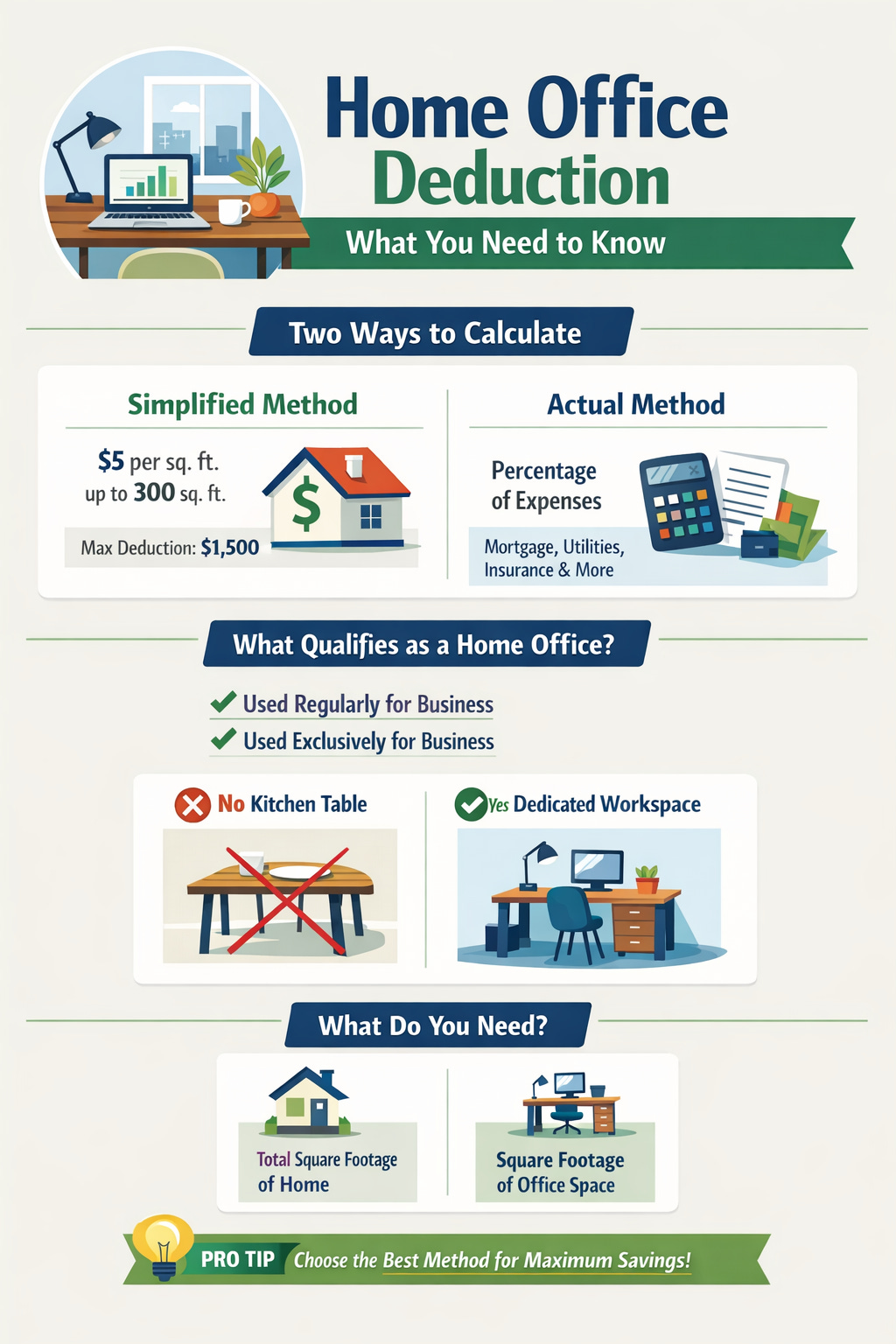
Working from home has its perks—but one of the biggest advantages is the home office deduction.
If you qualify, this deduction can help reduce your taxable income and keep more money in your pocket.
Let’s break it down in simple terms.
Two Ways to Calculate the Home Office Deduction
You can choose between two methods:
1. Simplified Method
$5 per square foot
Up to 300 square feet
Maximum deduction: $1,500
This method is quick, easy, and requires minimal recordkeeping.
2. Actual Expense Method
This method allows you to deduct a portion of your actual home expenses, including:
Mortgage interest or rent
Utilities
Insurance
Repairs & maintenance
Depreciation
Your deduction is based on the percentage of your home used for business.
👉 Example: If your office is 10% of your home, you may deduct 10% of eligible expenses.
What Qualifies as a Home Office?
To qualify, your space must be:
Used regularly for business
Used exclusively for business
That means:
❌ Your kitchen table doesn’t qualify if it’s also used for meals
✅ A dedicated workspace—even part of a room—can qualify
Important: You do not need a separate room. A clearly defined area used only for business is enough.
There are some exceptions (like in-home daycare businesses), but most people must meet the “exclusive use” rule.
What Information Do You Need?
To calculate your deduction, you’ll need:
Total square footage of your home
Square footage of your office space
From there, you can determine your business-use percentage.
Which Method Should You Choose?
Use the simplified method if you want ease and less paperwork
Use the actual method if your expenses are high and you want to maximize your deduction
Final Tip
If you’re unsure which method is best, run the numbers both ways—or talk with a tax professional to make sure you’re getting the most benefit.
What’s Next?
Up next: Vehicle Expenses—another major deduction many business owners overlook.
The home office deduction is one of the simplest ways to lower your tax bill—if you use it correctly.